Article
19 October 2026
6 minute read
This website will offer limited functionality in this browser. We only support the recent versions of major browsers like Chrome, Firefox, Safari, and Edge.
The litigation environment in the United Kingdom is undergoing significant transformation. New categories of liability are emerging, posing considerable challenges for risk professionals and the insurance sector, while judicial decisions continue to redefine coverage boundaries. From pollution-related claims that echo the scale of historic asbestos litigation to the rapid deployment of artificial intelligence (AI) systems creating unforeseen exposures, these developments demand a forward-looking strategy.
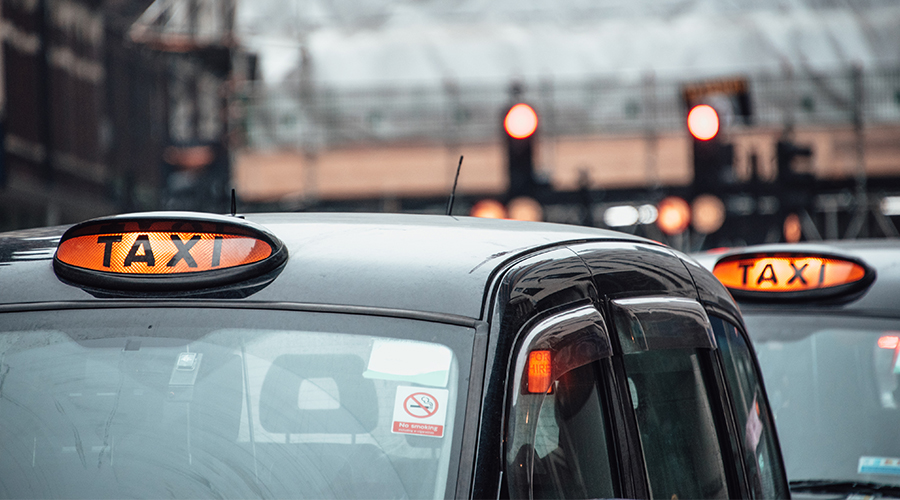
One of the most interesting developments is in the autonomous vehicles sector, which presents both challenges and opportunities for UK insurers. You can hail a driverless ride in San Francisco using the Waymo One app in much the same way as you would an Uber, and a fully autonomous, all‑electric Jaguar I‑Pace will arrive. The Waymo Driver promises ‘autonomous driving technology with safety at its heart’, and it is coming to London, with the aim of launching the same Jaguar I‑Pace robotaxi service as operates in San Francisco by September this year.
Waymo is currently testing its driverless taxis across a number of London boroughs, mapping the streets without passengers but with a safety driver at the wheel. In May, Waymo apologised to residents in Spitalfields who were woken every day for about a week at 4am by a ‘ridiculous mixture of reversing and siren sounds’, as a taxi drove down a dead‑end street and had to reverse out. In April, a test vehicle drove through a live police cordon on Harlesden High Street while officers were investigating a double stabbing. The safety driver of that vehicle has been suspended pending the outcome of an investigation, raising concerns about whether the technology currently meets minimum safety standards. Earlier this year, New York City paused robotaxi trials following safety concerns.
Without a driver, who is liable in the event of an incident? The Automated Vehicles Act 2024 establishes the framework for the safe deployment and commercial operation of self‑driving vehicles. The Act requires vehicles to pass a rigorous self‑driving test, ensuring they are at least as safe as a competent human driver. When a vehicle is driving without a driver, liability shifts from the human driver to the vehicle’s manufacturer or responsible operator.
Although the Act was implemented on 20 May 2024, the Automated Vehicles Act Implementation Programme will not be rolled out until late 2027. It will produce the secondary legislation and guidance required to establish the Act’s regulatory framework for self‑driving vehicles in Great Britain. If Waymo proceeds with plans for its robotaxi service to be operational in London by September 2026, before the regulatory framework is in place, this creates uncertainty for insurers and brokers over how accident claims arising during the trial phase will be pursued.
Even when the Implementation Programme is in force, claims are likely to involve multiple defendants, overlapping motor and product liability cover, cyber security issues and complex technical investigations into vehicle data systems. Brokers will need to advise and educate clients on their responsibilities, while insurers will need to evolve to navigate an entirely new category of risk.
As London’s streets prepare for driverless cabs, the insurance market must prepare for liability to change direction.