Article
13 August 2026
12 minute read
This website will offer limited functionality in this browser. We only support the recent versions of major browsers like Chrome, Firefox, Safari, and Edge.
20 October 2026
Make an enquiry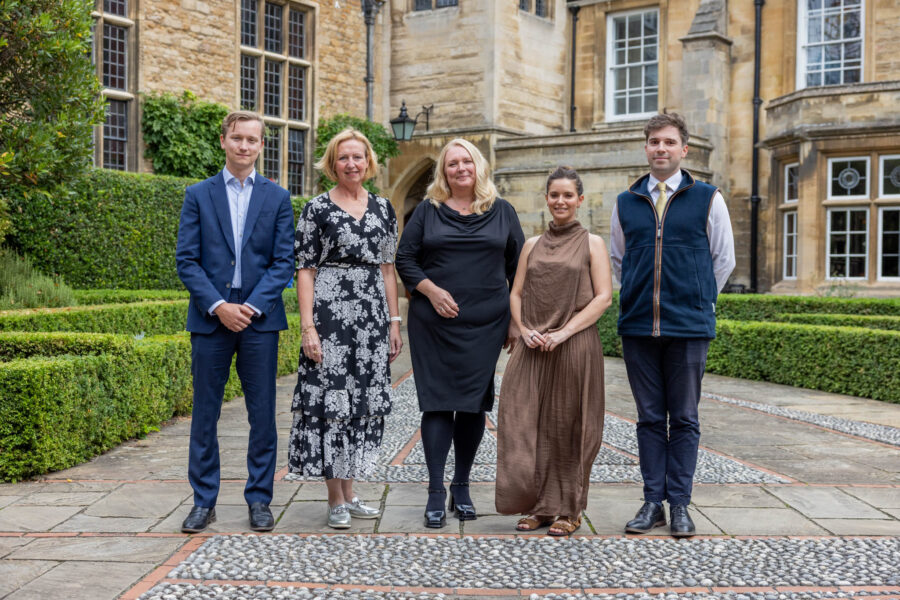
Artificial intelligence (AI)’s great contribution to solving the world’s greatest challenges will be by playing a support role to human leadership – not fighting its creators for supremacy.
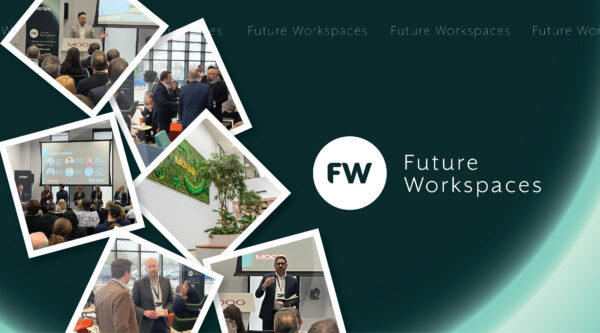
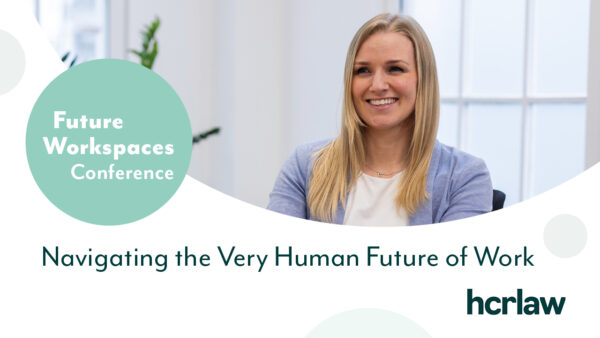
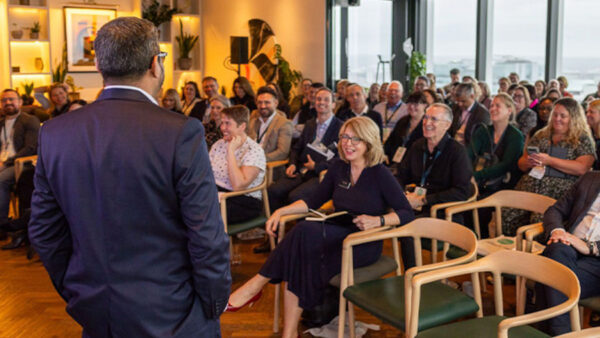
That was the consensus among panellists at an HCR Law debate held during Cambridge Tech Week in September on the value of human leadership in a tech-excited world.
Chaired by HCR Law Partner, Kerry Beynon, the panel brought together leaders from technology, venture capital and commercial real estate to consider how organisations can adopt AI without sidelining human intelligence and empathy which are the true driving forces of innovation.
AI has caught the headlines most recently after hacking into dozens of global institutions, leading the world to ask: ‘where are the human checks and balances’?
But despite global news headlines, the mood among panellists was notably optimistic. They recognised the pace and scale of technological change but rejected both the uncritical hype and dystopian fatalism.
Their shared message was that AI can be a powerful tool for progress, productivity and discovery, but only when shaped by leaders who understand context, accountability and human consequence.
Jane Hutchins, Director of Cambridge Science Park, described the positivity that comes from working around entrepreneurs and innovators who are motivated by dissatisfaction with the status quo. For her, technology is often driven by people who want to make the world better but warned that their ambition must be matched by the serious consideration of how that could impact workforces and communities.
Joe Lloyd, Commercial and Strategy Lead at Oxford Dynamics, which is building frontier technology for areas of consequence, including national security, defence and biotechnology, reinforced the need to focus AI adoption on tangible benefit. He said that technology should be used to genuinely improve outcomes, not inserted into settings simply because optimism, hype or competitive anxiety have made its use feel necessary.
AI processes information at extraordinary speed, but it doesn’t have human empathy and can’t understand the environment in which information will be used, so the consequences of an error can be significant.
For Ilana Wisby, who has a PhD in quantum physics and was founding CEO of Oxford Quantum Circuits until 2024 (she is now Entrepreneur in Residence at Cambridge Innovation Capital and also at the National Physical Laboratory), leadership in advanced technology carries a particular responsibility: Progress cannot be halted, but that makes values-led leadership more important, not less. She argued that leaders need to position themselves at the centre of conversations between policymakers, academia, industry and wider society, because the question of how powerful technologies are applied is no longer confined to specialist technical teams.
Employees without proper training on the vast capability of AI systems are now being encouraged to experiment in embedding AI systems into daily processes. That creates risk if proper governance, data protection, accountability and ethical review are not put in place.
AI outputs can appear polished and plausible – even where they are incomplete or wrong.
Companies must train people properly on how to use these new technology tools and question their results, spot gaps and add their professional judgement.
Many AI systems are probabilistic, explained Joe Lloyd. Where they lack sufficient context or training data, they may generate a convincing answer rather than admit uncertainty. Technical developments may reduce some of these risks over time, but for now, he said, users must understand how answers are generated, why context matters – and when human verification is essential.
AI’s strengths lie in processing, pattern recognition and automation, but it can’t motivate, empathise and properly communicate a shared purpose. That’s where humans are unique.
Wisby described leadership as fundamentally emotional. Building high-performing teams around complex technology requires more than technical direction. It requires stories, values and connection.
The most effective communication is not only accurate, it must also be meaningful. A venture capital presentation overloaded with technically accurate slides may be comprehensive, but it is unlikely to persuade investors. A good leader translates complexity into clarity without stripping away substance.
Thomas Bewes, asset manager at leading regional property developer and investor, The Howard Group (which among other projects owns and operates Unity Campus, a life sciences and healthcare campus based in Cambridge), added a practical workplace perspective. How will early-career professionals entering a labour market respond to employers increasingly ask how “AI native” they are? Beneath that question may sit a deeper assessment of curiosity, critical thinking, confidence and communication: These are precisely the human skills that risk being neglected if organisations focus only on tool adoption.
AI will not make human abilities irrelevant, the panel agreed, it was almost the opposite: as machines become more capable, human skills become more valuable.
The ability to make judgements, build trust, motivate teams, hold difficult conversations and understand how people respond to change may become a defining feature of successful organisations.
AI has and will continue to change jobs, workflows and expectations. Some tasks may become automated; others may be redesigned. New skills will be needed. The challenge for leaders is to handle that transition honestly, explaining why changes are being made, where people continue to add value and how they will be supported to adapt.
There was also a clear warning against treating AI as a shortcut to responsibility. In high-consequence environments, Joe Lloyd said, trust depends on clear boundaries between system and human. If a system behaves unpredictably or appears to act beyond its intended scope, users will struggle to trust it. Well-designed interfaces, clear intervention points and transparent accountability are therefore not barriers to adoption; they are the foundations that allow adoption to succeed.
The UK’s ambition to be a global centre of AI excellence was welcomed, but speakers questioned whether regulatory frameworks are keeping pace with private sector investment and deployment.
Over the last few months, many global technology companies which are developing AI models without regulations, are calling on their governments for guidance.
During a United Nations conference in September, the heads of AI leaders such as OpenAI and Anthropic told delegates that the current pace of AI development, and the risks it poses to society, demands international coordination.
President Trump disagrees. He opposes broad federal AI regulatory oversight because he believes it would hinder USA innovation and give technological advantages to China. During his address at the UN conference, he said: “Whoever masters the technology first wins.”
HCR Law’s Cambridge Tech Week panel supported values-driven regulation rather than tick-box compliance. The memory of GDPR implementation was an example of how necessary regulation can still create confusion and cost if businesses do not understand what compliance means in practice. With AI, the panel suggested, there is a risk that rules may arrive after problems have already emerged, or that poorly understood rules could lead to defensive behaviour rather than responsible innovation.
Joe Lloyd noted that the decentralised nature of AI adoption makes regulation particularly difficult. Tools are being used across sectors, in different ways and at different levels of sophistication.
The panel agreed that goal-setting and mission intent rely on human emotional understanding. Contracts may be supported by automation, research may be accelerated by AI, and communications may be drafted by tools, but business is still done face-to-face – and that doesn’t always include video conferencing through software such as Teams.
Trust may increasingly depend on human presence, human relationships and the ability to look someone in the eye. Perhaps the answer to more sophisticated machines is not to become more machine-like, but more consciously human which would continue to drive creativity, motivation and relationship-building.
In-person meetings should involve conversations without laptops and including eye contact. It’s a return to traditional engagement and communication which strengthen the capabilities that technology cannot replicate.
HCR Law’s Cambridge Tech Week Panel unanimously agreed that AI should not be feared, but it shouldn’t be adopted at any cost.
The panel offered a hopeful route: use technology boldly, but govern it carefully; embrace productivity, but protect judgement; automate where helpful but let humans lead.
Good leadership is needed to understand and set clear values and boundaries, create trust, support people through change and ensure technology is directed towards outcomes that genuinely improve lives and work.
The future of AI will not be decided by computing power or investment levels. It will also be decided by the quality of the human leadership around it.
Catherine Mitchell, Partner in HCR Law’s Employment, HR and Immigration Team, said: “Our expert panel cut through the hype and the scaremongering. Thanks to their comments, I have a great sense of optimism that without the human, the technology isn’t going to flourish. I’ve loved the discussion of the confidence, the curiosity and all of the things that mean being a human.”
CASE STUDY – What is the perfect working environment? Thomas Bewes gave an example of the wider benefits of deploying AI to improve work environments to not only support employees but help them flourish. If organisations measure only what AI can easily count, they may miss what matters most. Productivity, space utilisation and process efficiency are important, but so are curiosity, engagement, confidence, trust and wellbeing. A building may carry a wellbeing accreditation but still contain unhappy people. A team may use sophisticated AI tools and still lack purpose. For leaders, this creates a challenge and an opportunity. AI can free people from repetitive work and help them make sense of complexity, but it cannot decide what kind of workplace people want to build. That remains a human responsibility. |