

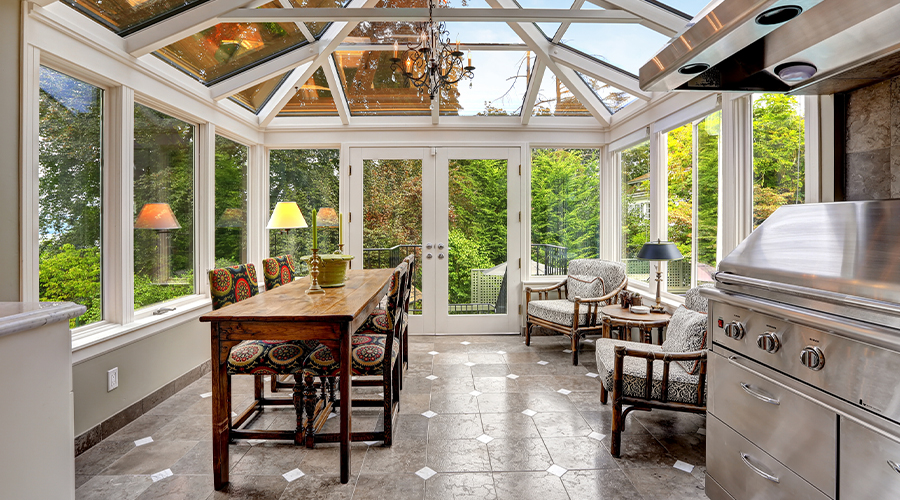
Many homeowners dream of adding a sunroom or conservatory to enjoy their garden year-round. Extra living space is appealing, but there are important legal and regulatory matters to consider before breaking ground.
Planning permission
Many sunrooms fall within permitted development rights, meaning you can build without a formal planning application. However, this depends on factors including the size, height, garden coverage and proximity to boundaries.
Crucially, permitted development rights are cumulative, so any previous extensions may have already used up part or all of your allowance. Some local authorities have also introduced Article 4 directions removing permitted development rights in certain areas.
Properties in conservation areas, Areas of Outstanding Natural Beauty, listed buildings or Article 4 areas are subject to stricter controls and may need express consent. If you’re uncertain, it’s wise to seek a Certificate of Lawful Development (CLD) from your local planning authority before starting work.
A CLD is an official document confirming that your proposed works are lawful. Obtaining one in advance provides certainty, assists with future conveyancing and protects against enforcement action.
Building regulations
Even where planning permission isn’t required, building regulations approval will still be necessary to ensure safety and energy efficiency standards are met, particularly given the amount of glazing involved.
Fully integrated sunrooms will require an application and non-compliance can cause problems when selling, so it pays to get this right from the outset. If your sunroom includes glazing, ensure your installer is registered with FENSA (Fenestration Self-Assessment Scheme) or a similar competent person scheme, as they can self-certify compliance with building regulations.
Always retain all paperwork, including FENSA certificates, building regulations completion certificates and any planning consents, as these will be required when you come to sell.
Easements and rights of way
Check your title deeds for any easements or rights of way that could affect your build. An easement is a right benefiting a neighbouring property, such as a right of access or right to light.
Building over or obstructing an easement can lead to disputes and, in some cases, court orders requiring removal of the structure. You should also check whether any public sewers or drains run beneath or close to the proposed site. If so, a build-over agreement from the relevant water company may be required before work begins.
Restrictive covenants
Your property may also be subject to restrictive covenants – conditions imposed by a previous owner that limit what you can do with the land. Common examples include prohibitions on building near boundaries or requirements to obtain consent before alterations.
Breaching a covenant can result in an injunction or damages claim.
Party wall considerations
If your sunroom will be built close to a boundary, the Party Wall etc. Act 1996 may require you to serve notice on affected neighbours before work starts.
Final thoughts
Adding a sunroom can be a great way to enhance your home but addressing the legal requirements at the outset will help ensure the project runs smoothly. If you have questions about your specific circumstances, seek professional advice before you begin.
How can we help you?
Related articles

Article
9 October 2026
20 minute read
Peer exemption, DBS requirements and the removal of the supervision exemption under the Crime and Policing Act 2026
Read more
Article
7 October 2026
3 minute read
Recruitment risk has moved upstream: why pre-employment checks are now a governance issue
Read more
Article
2 October 2026
7 minute read
Withdrawing a job offer can amount to breach of contract: Kankanalapalli v Loesche Energy Systems Ltd
Read more

Article
1 October 2026
7 minute read
Why early due diligence can make a difference in independent school transactions
Read more
News
24 September 2026
5 minute read
HCR Law strengthens its Education team with four strategic hires
Read more
Article
22 September 2026
7 minute read
Acas opens consultation on new Disciplinary and Grievance Code
Read more
Article
14 September 2026
9 minute read
International collaboration: legal and strategic considerations for UK independent schools
Read more
Article
9 September 2026
7 minute read
Academy Trust Handbook 2026: what’s changing for trusts
Read more
Article
25 August 2026
9 minute read
Department for Education publishes statutory allergy safety guidance for schools
Read more
Article
21 August 2026
11 minute read