

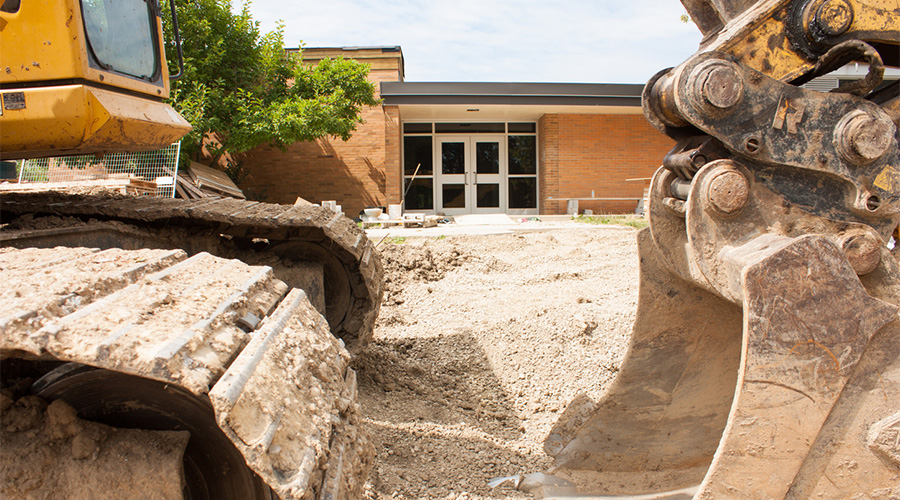
Education buildings are far more than lecture rooms and corridors. They’re environments where children, students, staff and visitors must feel safe every day.
Recent high-profile events, including the Grenfell Tower tragedy in 2017 and the discovery of reinforced autoclaved aerated concrete (RAAC) in numerous education buildings, have brought building safety firmly into the spotlight.
For education bodies (EBs), including schools and further or higher education institutions, the implications are significant. Understanding the changing regulatory landscape is now essential for anyone involved in managing or overseeing education estates.
What has changed?
The Grenfell Tower fire exposed serious failings in how building safety was managed and regulated in the UK. In response, parliament introduced the Building Safety Act 2022, which brought sweeping reforms to the country’s building safety laws.
One of the most important changes was the introduction of a ‘dutyholder regime’ under the Building Regulations 2010, which came into force on 1 October 2023. This regime applies to all building work where the Building Regulations apply, not just to high-rise buildings. Its central aim is to embed clear accountability at every stage of a construction or refurbishment project, so the kind of systemic failures seen at Grenfell aren’t repeated.
What this means for education bodies
Under the updated regulations, when an EB — or the body responsible for it, such as an academy trust, governing body or local authority — commissions design or building work, it takes on specific legal duties as the ‘client’.
These duties include allocating sufficient time and resources for the project, ensuring complete and timely information is provided to all designers and contractors and putting systems in place to plan, manage and monitor the work so it complies with the regulations on completion.
Where more than one designer or contractor is involved, the EB must formally appoint, in writing:
- A principal designer to coordinate design work
- A principal contractor to manage building work on site.
Anyone appointed to these roles must be demonstrably competent, and EBs should keep written records of the steps taken to verify this. Importantly, even where an external organisation is appointed to carry out these functions, legal responsibility remains with the EB as client.
Designers and contractors working in the education sector have their own obligations. Designers must not begin work unless they’re satisfied the EB understands its duties and must ensure their designs comply with the regulations. Contractors must likewise confirm the EB’s awareness of its responsibilities and ensure all work on site is compliant.
Beyond the Building Regulations
EBs must also consider the separate Construction (Design and Management) Regulations 2015. While these duties broadly mirror those in the Building Regulations, they focus specifically on health and safety rather than building compliance. The same individual or organisation may hold equivalent roles under both regimes, provided they are competent and the arrangement is confirmed in writing.
In addition, the RAAC issue has highlighted the importance of regular structural assessments of education buildings. The Department for Education has issued comprehensive guidance to help EBs identify and manage RAAC, with government funding available for removal and remedial works.
Fire safety obligations under the Fire Safety Act 2021, which applies to all non-domestic buildings including EBs, add a further layer of compliance.
Practical steps
In practice, EBs should plan early, appoint competent dutyholders in writing, document all competence checks, provide comprehensive building information and allow sufficient time and budget for compliance.
Building safety is a shared responsibility. By staying ahead of regulatory changes and taking a proactive approach, EB leaders can help create safe environments where students and staff can thrive.
How can we help you?
Related articles

Article
5 October 2026
13 minute read
Construction industry battling lack of appetite for risk, long payment terms and skills shortages
Read more
Article
1 July 2026
7 minute read
King’s Speech 2026: key implications for the construction sector
Read more
Article
1 July 2026
5 minute read
The Urban Splash dispute: a test case for developer liability under the Building Safety Act 2022
Read more
Article
1 July 2026
5 minute read
Building Liability Orders: court delivers landmark building safety ruling
Read more
Article
1 July 2026
6 minute read
The UK government’s plans to ban retention payments in construction contract
Read more



Article
12 March 2026
6 minute read
Remediation contribution orders and the risks for directors
Read more
Article
12 March 2026
7 minute read