
Article
2 October 2026
11 minute read
This website will offer limited functionality in this browser. We only support the recent versions of major browsers like Chrome, Firefox, Safari, and Edge.
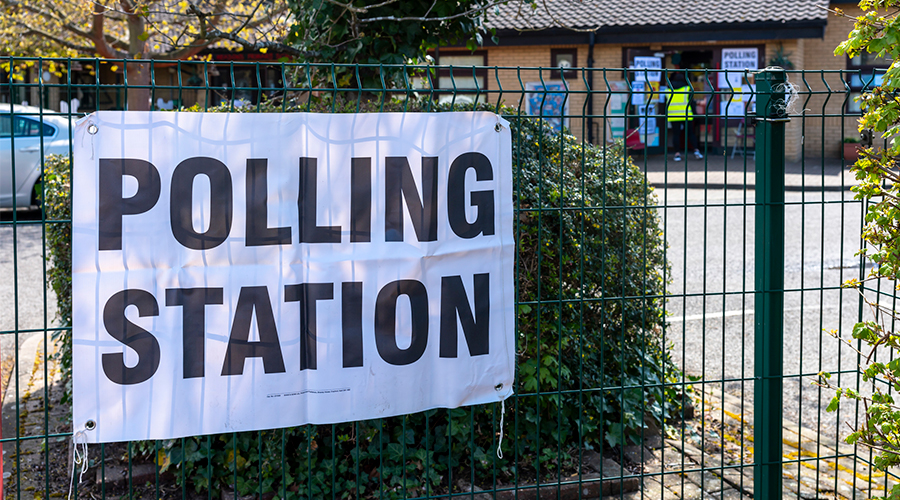
We’re hearing a lot about elections at the moment. They are, by design, competitive. Each time we hold elections, there’s the usual explosion of canvassing, debating policy, sharing articles, reposting videos and expressing robust views about candidates and local issues. As well as direct consequences at the ballot box, elections may unfortunately result in other disputes: complaints to regulators, reputational fall‑out for individuals and organisations, and, in some instances, litigation.
One such dispute arose after the Brexit referendum, resulting in a libel claim against a journalist. While the law of defamation exists to protect reputation from serious, untrue allegations, English law also guards against litigation being used to silence legitimate public debate.
A few years after the 2016 Brexit referendum, Arron Banks, a prominent figure in the Brexit campaign, sued the journalist Carole Cadwalladr for libel – a form of defamation. During a TED Talk and across two social media posts, Cadwalladr suggested that Mr Banks had secretly broken electoral funding law by taking money from a foreign power and lied about it. The dispute ultimately reached the Court of Appeal in 2023.
By the time of trial, official investigations had found no evidence supporting the alleged breach of the law, and Cadwalladr had abandoned her defence of truth and apologised. However, she did not admit liability. The legal battleground therefore centred on two key aspects of the Defamation Act 2013: the requirement for Banks to prove ’serious harm’ to reputation, and Cadwalladr’s public interest defence. The trial judge decided that the publications did not cause serious harm, or if they had, they were protected by the public interest defence.
The Court of Appeal agreed with the trial judge insofar as the social media posts were concerned, but not in relation to the TED Talk. It held that Cadwalladr’s remarks were protected at the time she made them as they were in the public interest, but once the Electoral Commission had publicly confirmed (in April 2020, several years after the Talk) that there was no evidence of the original allegations, the public interest defence ceased. As there continued to be at least 100,000 views of the Talk after that date, the erroneous statements caused serious harm to Banks’ reputation for which he was entitled to damages.
Although Banks v Cadwalladr was not itself about a local or national election, its themes are closely aligned with election‑period dynamics: fast‑moving information, high‑stakes allegations, rapid online sharing and reputational consequences that can extend far beyond the immediate audience.
In particular, it provided guidance on how ’serious harm’ is assessed where online material remains accessible over time, and how courts think about what happens when a publication may initially be protected by the public interest defence but later becomes indefensible as circumstances change.
Although the Defamation Act 2013 is clear that a statement is only actionable in defamation if, and to the extent that, its publication causes serious harm, in a world of continuing online publication, this is not always a single ‘all or nothing’ question. Assessment may be required over different periods of publication, particularly where facts change over time. For those speaking publicly during an election, this underscores that the legal risk is not only about what is said at the moment of initial publication, but also whether continuing access to the same words remains justifiable as facts develop.
The Court of Appeal rejected the idea that harm is reduced merely because readers or viewers are said to be in an ’echo chamber,’ or because the claimant’s reputation among those recipients is of ’no consequence.’ Even though election‑period communications may be targeted to particular communities, online groups or local networks, the fact that a message is shared on a particular ’side’ of a debate will not necessarily immunise it from being treated as causing serious reputational harm.
One concern about defamation claims being brought against journalists is that they limit press freedom, especially where journalists are sued in their personal capacities. In recent years, legislation has been enacted to prevent Strategic Lawsuits against Public Participation or (SLAPPs).
The trial judge in the Banks v Cadwalladr case expressly rejected labelling the claim as a SLAPP on the facts. But the broader public controversy surrounding the case illustrates why the topic has become central in the policy conversation. Litigation can be legitimate, but it can also be deployed strategically to discourage journalists revealing important information, especially when there is a substantial imbalance of resources between the parties.
Elections will always produce disputes, and some of those disputes will end up in court. While serious and harmful false allegations may result in damages,, our legal system will not be exploited. It protects against silencing participation in democratic debate simply because a claimant has deeper pockets than a journalist. At the same time courts will apply defamation law to modern, enduring online publications. Our law aims to keep the marketplace of ideas open and to protect the democratic process for all.