News
25 March 2026
4 minute read
This website will offer limited functionality in this browser. We only support the recent versions of major browsers like Chrome, Firefox, Safari, and Edge.
The UK’s manufacturing sector is underinvested, with outdated technology, poor working environments and skills shortages proving major obstacles to good productivity.
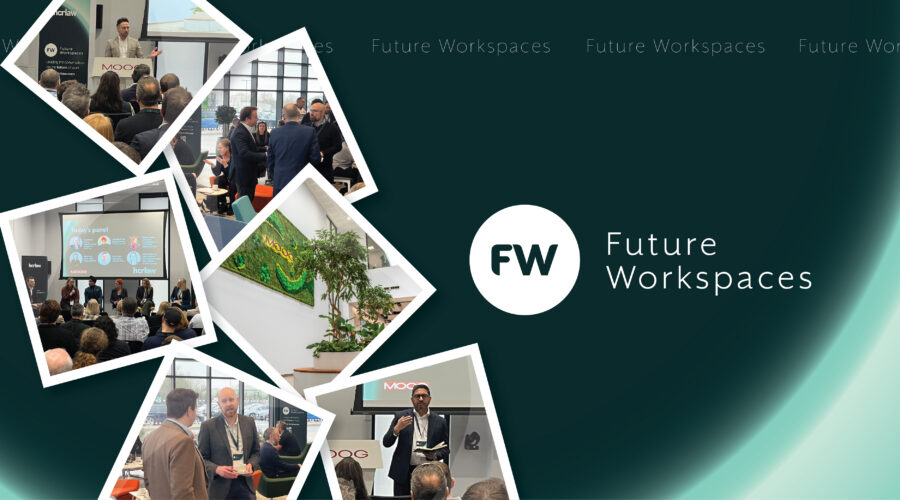
At the latest event in our Future Workspaces programme, HCR Law brought together more than 70 delegates from across the manufacturing sector to discuss practical ways to solve the productivity puzzle.
Manufacturing is worth £220bn to the UK economy. With the sector lagging worryingly behind European competitors, productivity is a critical issue for industry and government.
The event was hosted at Moog Commercial Aircraft Group, which opened a £50m manufacturing facility in Tewkesbury in 2024.
Omer Simjee, Partner in HCR’s Employment and Immigration team, said: “Manufacturers can’t afford to hit the pause button on performance. We want to help them unlock the full potential of technology, workspaces and their people.”
Last year Moog Commercial Aircraft Group produced around 10,500 server valves at Tewkesbury – leading to around $90m of sales. This year that’s predicted to rise to 13,500, which will need a further 100 members of staff adding to its current roster of 400, according to Nick Hall, Moog’s General Manager at Tewkesbury.
Moog’s exemplar Tewkesbury facility has delivered a step change in the global company’s manufacturing efficiency, allowing growth and improved productivity.
Nick said: “We focus on four areas to drive productivity: flow, collaboration, capability and empowering our people in the environment. When planning this new facility, we were supported with a $10m Aerospace Technology Institute-funded programme, which we match-funded to help create the most efficient workflow around the site, using factory simulations to identify potential bottlenecks.
“Our objective is to significantly reduce the time taken to produce a valve.”
He cited one aspect of the new facility’s design: combining goods inward and outward in one area.
“Traditionally, these have been at opposite ends of a factory, but the skills needed are similar: staff inspecting parts and undertaking documentation.”
The panel, moderated by Lisa Kemp, Partner and Head of HCR’s Employment team in Worcester, highlighted the resilience and innovation of the UK’s manufacturing sector, but pointed out that ageing facilities are a barrier to efficiency.
Ricky Vine, Operations Director at Moog in Tewkesbury, agreed, but pointed out that even in Moog’s older facility which could no longer meet the needs of the expanding business, the operations team found ways to adapt. “It’s about having a long-term vision, which we adopted even before we knew we would be building a new factory.”
Panellist Kirsty Davies-Chinnock, Managing Director at Smethwick-based Professional Polishing Services, said: “If we’re not hitting our productivity numbers, we’re not making money. Manufacturing SMEs are largely self-funded, so our challenges lie in managing costs. And the biggest cost now to manufacturing is energy.”
Nina Gryf, Senior Policy Maker at Make UK, the manufacturers organisation, added: “It’s up there with the lack of access to skills. The UK has the highest energy costs in Europe and that’s a barrier to investment.”
Sally Stevenson, Senior Business Development Director at West Midlands Growth Company, said that energy grants are available to SMEs, depending on location and eligibility.
She also highlighted the government’s Made Smarter initiative, which is helping SME manufacturers innovate with new technologies.
To date it has helped more than 2,000 manufacturers, including supporting hundreds with match-funding on digital improvement programmes.
Gurtake Singh is Design Director at global architecture firm Gensler. Also speaking on the panel, he said: “Attention to detail when designing or redesigning a facility can have a huge impact, such as minor reconfigurations of a space and improved access to daylight.
“Manufacturers also can use their public spaces to celebrate what they make, inspiring both employees and visitors.”
HCR Law’s Lisa Kemp added: “We were delighted to see so many delegates getting involved in our Future Workspaces programme.
“Collaboration and knowledge-sharing fosters innovation and good practice, boosting productivity across the industry.”