Article
Future‑ready legal teams: how rising expectations are reshaping in‑house legal
22 April 2026
Make an enquiry
In‑house legal teams are going through one of the most significant shifts of the past decade. Over the last 18 months, our conversations with general counsel and senior in‑house leaders point to the same conclusion: expectations of in-house legal have changed and they aren’t going back.
This reflects a fundamental rethink of how in‑house teams operate, how visibly legal is expected to contribute across the organisation and how legal and commercial judgement are relied on earlier and more frequently.
For many GCs, this reality prompts some searching questions. How do you continue to deliver at this level? What skills and capabilities are needed to remain credible? And are existing team structures fit for a world of accelerating regulation, rapid technology adoption and growing demand for clear, timely commercial guidance?
Why capability is being re‑imagined
GCs consistently describe what feels like a perfect storm of pressure and expectation. Regulatory intensity continues to rise, with boards seeking greater transparency, stronger governance and decision‑making that can be clearly defended. Internally, boards want legal teams involved earlier, offering practical options they can act on quickly – not a default “no”, but a confident “yes, if…” that helps move the business forward.
At the same time, the use of AI has moved quickly from future ambition to day‑to‑day reality, often faster than legal teams feel fully prepared for.
Together, these forces are pushing in‑house teams beyond a purely lawyer‑centric model. What’s emerging instead is a more blended capability, where legal judgement is supported by operational discipline, data confidence, comfort with technology and stronger business partnering
Put simply, the work itself hasn’t fundamentally changed – but expectations about how Legal delivers it certainly have.
Are legal teams ready to use technology in the right way?
Many GCs recognise that the traditional model, built on deep expertise, informal prioritisation and more than a few last‑minute heroics, wasn’t designed for today’s volume or pace of demand.
The teams making the most progress are already shifting how work gets done. They’re turning repeat matters into clearly defined services that give the business greater predictability without sacrificing quality and spotting risk earlier, engaging sooner and lifting their gaze to address issues before they escalate.
Delivery is also becoming more system‑led. Playbooks, templates and clear handovers reduce reliance on individual effort, while technology supports consistency and speed. Legal is increasingly working alongside privacy, risk, procurement, IT security and product teams, so legal input lands where it adds the most value.
This isn’t about turning lawyers into technologists. It’s about giving legal teams the skills, structure and confidence to work smarter, freeing up headroom for high‑value judgement, while well‑designed processes quietly absorb low‑value work
The capabilities general counsel need next
Over the past year, our conversations with general counsel have focused less on what legal does and more on how teams are set up to deliver in a very different environment.
Six capabilities stand out as priorities that GCs believe will matter most in the next phase:
- Regulatory agility, not reactive compliance
Regulatory change is now too fast‑moving and too interconnected to manage through periodic reviews or siloed expertise. What’s needed is governance embedded into day‑to‑day business activity, supported by the right technology and practical, role‑relevant training.
Many in‑house teams are investing in targeted upskilling, particularly in areas such as data, ESG, financial regulation and compliance, so lawyers can engage earlier. Training from external law firm partners that’s grounded in in‑house realities, rather than abstract theory, is proving especially valuable.
- Legal data literacy that informs real decisions
There’s growing appetite for clearer, real‑time insight into what’s driving demand, where bottlenecks arise and how risk is trending. The aim isn’t dashboards for their own sake (you can read my previous article on this here), but the ability to answer key operational questions in minutes, not days, and to make decisions based on evidence rather than instinct.
- AI‑enabled workflows
The focus has shifted from whether to adopt AI to how to do so safely, responsibly and in a way teams trust. Clear use cases, sensible guardrails and training that enables lawyers to interrogate, challenge and govern AI outputs are now front of mind, alongside confidentiality, ethics and risk management.
We’re seeing strong demand for practical support not just on the tools themselves, but on the governance frameworks that sit behind them.
- Disciplined intake and demand management
Most legal teams aren’t overwhelmed because the work is too complex, but by volume and work arriving without structure. Even relatively simple intake and triage models can make a material difference, improving predictability, reducing constant interruption and speeding up turnaround times.
This is often one of the quickest ways to relieve pressure without adding headcount.
- Commercial insight that supports better outcomes
Legal advice needs to land in commercial terms. GCs increasingly want to translate legal analysis into clear insights about impact, risk and options.
Visibility over demand, capacity and risk helps legal engage with the business in a more focused, pragmatic way and strengthens its position as a trusted commercial partner.
- Stronger cross‑functional leadership
Siloed working is becoming harder to justify. The most resilient legal functions operate as blended teams, bringing together lawyers, legal operations, privacy, risk, procurement and technology expertise. This amplifies legal judgement and supports delivery models that are more scalable, sustainable and aligned with how modern organisations work.
A practical roadmap
Most GCs we speak to aren’t looking for a wholesale transformation. They want a structured way forward that builds momentum, delivers visible progress and doesn’t disrupt what already works. A phased, pragmatic approach that focuses on easing pressure points first and gradually reshapes how legal operates is what resonates most.
A simple five‑stage roadmap is proving both achievable and effective:
- Diagnose demand – understand what’s really coming into the team: volume, risk profile and recurring pain points. This often surfaces small, targeted changes that deliver quick wins
- Introduce structured intake through light‑touch triage – early fact‑gathering and clearer service expectations help teams prioritise more effectively and reduce unnecessary back and forth
- Standardise one high‑volume workflow – supplier contracts, marketing reviews or HR queries are often good starting points. Clear templates, agreed fallbacks and defined handovers reduce friction and improve consistency
- Adopt AI with guardrails – successful teams define use cases, quality controls and accountability before wider rollout
- Rebalance capability – moving recurring work to operational roles or paralegals frees lawyers for higher‑value judgement. Targeted upskilling and external support where specialist confidence is needed strengthens the overall delivery model.
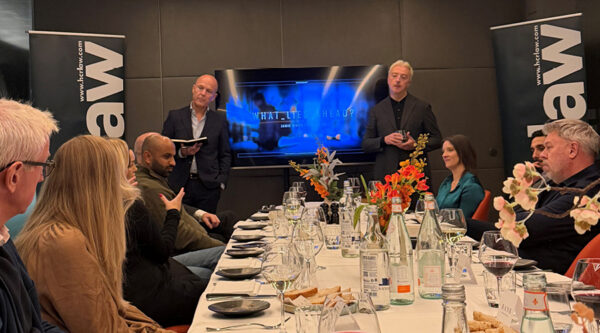
HCR Law is helping legal leaders on this journey, supporting teams with focused training and guidance around regulatory change, AI governance, commercial negotiation and defensibility, grounded in how in‑house teams actually work.
Looking ahead: what high‑performing legal teams will look like
When GCs describe where they want to be, a consistent picture emerges: technology and AI are used deliberately, with proper oversight, governance and auditability; teams have genuine visibility into demand, cycle times and emerging risk, and use that insight to guide decisions rather than simply report on past activity; delivery is more consistent because systems, templates and workflows underpin day‑to‑day work. And critically, senior lawyers have the time and space to shape decisions, instead of constantly firefighting.
In‑house legal teams are at a genuine inflection point. This capability shift is already underway, driven not by theory but by GCs actively redesigning their functions for a more complex, regulated and technology‑enabled world.
The encouraging reality is that none of this requires headline‑grabbing change. Future‑ready teams are built through a series of pragmatic upgrades, each one freeing capacity, reducing risk and delivering what GCs tell us they value most: the headroom to lead, not just react.
How can we help you?
Related articles

Article
22 June 2026
9 minute read
Leases: rethinking upwards-only rent reviews – the 2026 Act in practice
Read more
Article
17 June 2026
9 minute read
Matter management: why it’s a core risk discipline for in-house legal teams
Read more

Article
11 June 2026
8 minute read
Litigation risk management: when to settle, defend or escalate
Read more
Article
1 June 2026
7 minute read
HCR Law brings in-house legal leaders together to discuss evolving challenges and opportunities
Read more
Article
21 April 2026
8 minute read
Beyond compliance: Practical strategies for navigating regulatory overload
Read more
Article
21 April 2026
7 minute read
Flexible resourcing: how general counsel are rethinking external counsel
Read more
Article
21 April 2026
8 minute read
Fraud and Financial Misconduct: How GCs are modernising control frameworks
Read more
Article
21 April 2026
16 minute read
Intellectual property update: key developments for in-house counsel
Read more
Article
21 April 2026
9 minute read
Navigating whistleblowing: practical guidance for in-house lawyers
Read more