Article
Flexible resourcing: how general counsel are rethinking external counsel
21 April 2026
Make an enquiry
In‑house legal teams face growing pressure, with little sign of relief. Expectations continue to rise, but capacity doesn’t.
In our conversations with general counsel and senior in‑house leaders, the same tension comes up repeatedly. As regulatory change accelerates, transformation programmes multiply and businesses want legal teams involved earlier, more strategically and more often, many in-house teams are stuck firefighting rather than futureproofing.
Across our discussions and events, GCs who are getting ahead share a common approach. They focus on better intake, smarter use of data and flexible access to external resource, creating the headroom to lead strategically.
Why in-house legal teams lack capacity
Most legal teams already have the technical capability they need. What they lack is time in the right places.
Inconsistent triage and unpredictable work allocation create drag. Urgent matters often take precedence over important ones, resulting in limited capacity for advisory work and delays in strategic projects.
At the same time, external pressures continue to intensify:
- An expanding remit – ESG, AI ethics and supply chain due diligence now sit with legal teams, even where they didn’t before
- Cost scrutiny – boards and CFOs want clearer visibility on legal spend, panel efficiency and return on investment
- Rising expectations – legal teams are expected to shape decisions, not simply approve them.
The gap between what legal teams must deliver and the capacity to deliver it continues to widen.
Fixing legal intake and triage
GCs who are making progress usually start in the same place: how the work comes in.
They treat workload as a system to be structured, measured and improved, rather than a series of ad hoc problems. That mindset shift alone is often transformative.
What works in practice:
- Consistent triage – classifying work by risk, value and urgency, not by who shouts loudest
- Clear service levels – so stakeholders know what to expect, and when
- Demand analytics – identifying patterns, peaks and repeatable tasks that can be resourced differently.
These changes remove friction, speed up decisions and protect senior legal time for work that genuinely needs it.
Flexible resourcing without increasing headcount
Once intake is under control, the focus shifts to resourcing: how can teams flex capacity to meet real demand?
Flexible resourcing models are now part of the core operating model. Firm‑integrated solutions such as HCR Flex act as a quiet capacity multiplier, allowing teams to respond to surges, access specialist expertise and maintain control of spend without adding headcount or over‑relying on traditional external counsel.
Three benefits stand out:
- Absorbing peaks without disruption: regulatory deadlines, M&A activity and major projects can be resourced without derailing business as usual
- Targeted expertise when it’s needed: specialist support can be brought in quickly for a defined purpose, without recruitment cycles or long‑term budget commitments
- Commercial control: predictable pricing and transparent tracking allow legal teams to manage spend proactively.
Flexible resourcing helps GCs use external counsel more intelligently, preserving in‑house capacity for work where context, judgement and strategic insight matter most.
Rethinking external counsel and legal panels
Large, unwieldy panels are giving way to smaller, higher‑quality ecosystems, where each adviser has a clear role.
GCs now expect firms to demonstrate:
- Alignment with matter complexity and risk
- Genuine sector understanding
- Agility and commercial responsiveness
- Evidence of performance, not anecdotes.
Outcome‑based value matters more than activity‑based reporting. Dashboards, matter outcomes and benchmarked data increasingly shape how external counsel are assessed.
With better insight, GCs can:
- Route work to firms that demonstrably perform
- Confidently rebalance panels
- Combine traditional firms, flexible resource and alternative providers more effectively
- Improve value through smarter distribution rather than blunt cost‑
External counsel becomes a dynamic network, not a static list.
Building a high-impact legal function
When intake is designed, resourcing can flex and external providers are chosen on performance, legal teams gain the space to think strategically, anticipate risk and support the business in ways that matter.
This is the shift we’re seeing across leading in‑house teams: working differently, not harder.
The aim is to ensure the right work is done by the right resource, at the right time, building a legal function designed for strategy, not survival.
Our dedicated In-House With You team and HCR Flex can help support capacity within your legal team.
How can we help you?
Related articles

Article
22 June 2026
9 minute read
Leases: rethinking upwards-only rent reviews – the 2026 Act in practice
Read more
Article
17 June 2026
9 minute read
Matter management: why it’s a core risk discipline for in-house legal teams
Read more

Article
11 June 2026
8 minute read
Litigation risk management: when to settle, defend or escalate
Read more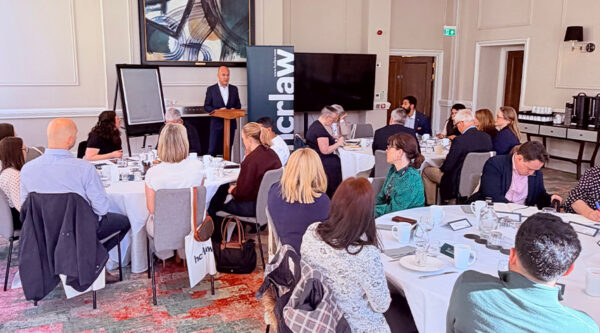
Article
1 June 2026
7 minute read
HCR Law brings in-house legal leaders together to discuss evolving challenges and opportunities
Read more
Article
22 April 2026
11 minute read
Future‑ready legal teams: how rising expectations are reshaping in‑house legal
Read more
Article
21 April 2026
8 minute read
Beyond compliance: Practical strategies for navigating regulatory overload
Read more
Article
21 April 2026
8 minute read
Fraud and Financial Misconduct: How GCs are modernising control frameworks
Read more
Article
21 April 2026
16 minute read
Intellectual property update: key developments for in-house counsel
Read more
Article
21 April 2026
9 minute read
Navigating whistleblowing: practical guidance for in-house lawyers
Read more