Article
21 September 2026
4 minute read
This website will offer limited functionality in this browser. We only support the recent versions of major browsers like Chrome, Firefox, Safari, and Edge.
17 April 2026
Download the report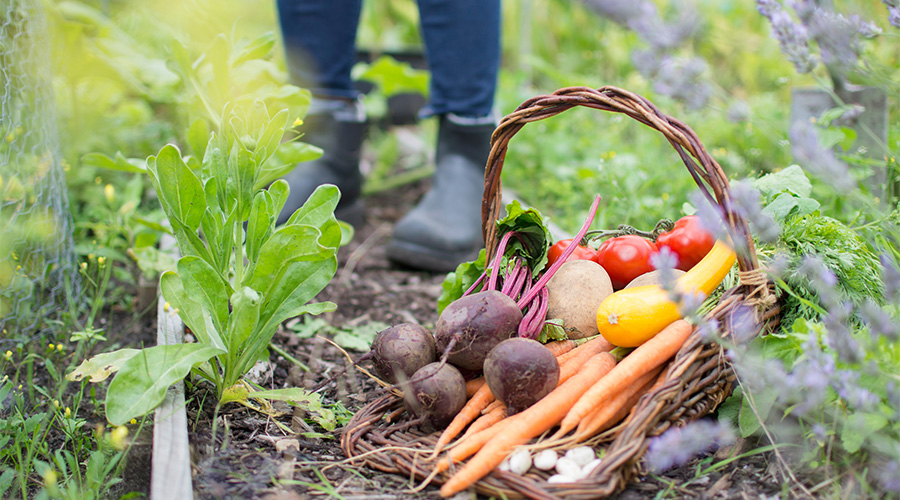
Environmental policy has a huge impact on how land is used across the UK. While environmental protection and enhancement need to be embedded in policy and are essential for nature and climate goals, this raises important questions about food security and farm viability. Namely: is environmental policy being prioritised over food production? Have we got the balance right?
Our latest agriculture report, “Food for Thought: shaping sustainable farming futures”, takes a deep dive into how land use policy and food production intersect – and what that means for farmers and the wider economy.
The report is clear that environmental policies are essential, but it also points to a growing imbalance in how these policies are being applied on the ground.
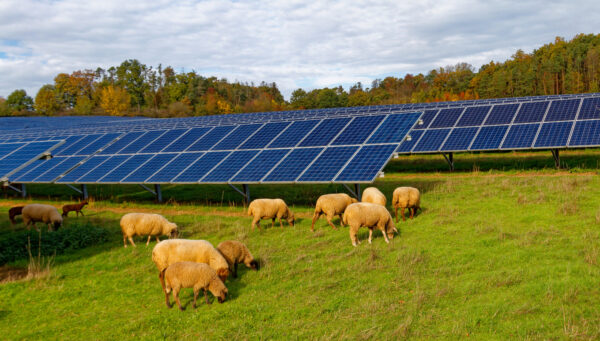
In recent years, environmental schemes and competing land uses have, in some cases, been prioritised over food production. Productive agricultural land has been lost to woodland creation and large-scale renewable projects, including on high-grade farmland. This has contributed to a growing sense among farmers that food production no longer sits clearly within national priorities, undermining confidence and long-term decision-making.
This isn’t just a concern for the agriculture sector. At a time of global instability and supply chain disruption, the report warns that deprioritising food production risks weakening the UK’s long-term food security. Figures from Defra suggest UK food production could fall by more than a third by 2050, emphasising the scale of the challenge.
A central theme running throughout the report is that food security, environmental stewardship and rural prosperity can’t be treated as separate or competing objectives.
Many farm businesses are no longer economically sustainable on food production alone. Increasing reliance on diversification, agri-environment schemes and non-core income streams to remain viable is a sign that the system is under pressure.
The traditional farmer’s response to the challenging economic environment is to work harder, but the workload that many farm businesses are trying to sustain to remain viable is simply not practical – and that is another limb of sustainability that the industry must take into account.
The report emphasises that environmental sustainability can’t be delivered without economic sustainability. Farms that can’t generate profit, plan ahead or invest with confidence are unlikely to deliver food, environmental outcomes or thriving rural communities over the long term.
The loss of productive land is also a strategic risk. Relying on imported food, which is often produced to unknown or lower standards, effectively offshores environmental impact rather than reducing it. In an unstable global context, this also exposes the UK to geopolitical, climate and supply chain shocks. Seen through this lens, domestic food production is a matter of national resilience.
“Food for Thought” rejects a simple food-versus-environment narrative. Instead, it argues for a ‘right land, right use’ approach.
This means supporting productivity where land is best suited to food production, while promoting environmental delivery alongside farming on less productive land where it can achieve the greatest gain. The aim is to align incentives so that sustainable food production is properly rewarded, rather than sidelined by schemes that unintentionally displace it.
The report calls for reform of agri-environment schemes to recognise this reality and integrate food production more explicitly into their design.
Uncertainty around availability of environmental schemes, land use priorities and wider tax policy has left UK farmers feeling maligned and reluctant to invest. They lack the confidence to make informed decisions for the long-term health of their businesses and their families.
This has long-term consequences for the UK’s agricultural sector, with skills and rural businesses at risk of disappearing just when the industry needs to be able to attract people to new careers to help develop and adapt to new technologies which are going to land on the industry at pace and scale over the next few years.
To rebuild confidence, farmers need to understand where food production sits within national policy and feel that it’s valued alongside environmental delivery.
While environmental sustainability matters, it shouldn’t come at the expense of food production; the two are intrinsically linked.
“Food for Thought: shaping sustainable farming futures” argues for a more balanced approach that protects productive land and supports viable farm businesses, while delivering credible environmental schemes.
The full report features insights from our Agriculture and Estates team and leading industry voices to examine the current state of UK farming and the future of British food security.