News
14 September 2026
3 minute read
This website will offer limited functionality in this browser. We only support the recent versions of major browsers like Chrome, Firefox, Safari, and Edge.
28 May 2026
Make an enquiry
Wales could be on the cusp of a significant economic opportunity following the designation of two major AI growth zones — in North Wales (Anglesey) and South Wales (between Magor and Bridgend).
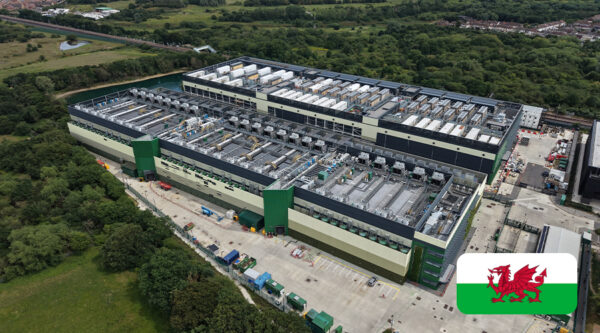
Central to their success will be the development of data centre campuses. These could create robust supply chains and support more than 8,000 jobs, contributing to an estimated £10bn investment across the region.
A special HCR Law round table, held at our Cardiff offices and led by partner Lauren Perdikis and legal director Gareth Davies, brought together key senior industry representatives, including data centre developers, investors, professionals and public sector advisers from across South Wales to discuss the opportunities and concerns.
Wales has been at the heart of the industrial revolution for two centuries with its history of mining and manufacturing. But the country hasn’t always reaped its rightful rewards.
Could it be different this time? The case for financial investment is solid – data centres are attractive to investors due to their stable, long-term income streams supported by strong contractual relationships with users. The sector is seen as a reliable asset class for pension funds and institutional investors.
What about public support? The country’s industrial heritage left behind a mixed environmental legacy, but communities across Wales could take a more pragmatic view than other parts of the UK because they understand the likely trade-off between regeneration, jobs and new skills opportunities – and the need for strategic development.
But there was recognition from all round table participants that the sector needs to raise awareness of the benefits of development before any negative opinions become entrenched.
Essential infrastructure upgrades, such as grid network improvements, will be needed to ensure that new data centres can be built at the scale required – something that benefit the whole community, not just the planned development.
The round table also discussed the UK’s creaking planning system which can delay projects for years.
But there are positive signs that the Welsh planning system is adapting to an increasing number of data centre applications, with Planning Performance Agreements (PPAs) playing a key role in securing resources and timelines.
However, concerns exist about the capacity of local authorities to manage complex applications efficiently. The introduction of an infrastructure consent regime may further strain resources and delay other planning processes.
The importance of strategic, long-term investment in planning functions to maintain institutional knowledge and support sustained development cannot be overestimated.
The data centre sector is market leading in terms of delivering high environmental credentials as part of proposed developments.
Environmental permitting, especially from Natural Resources Wales (NRW), is a significant challenge, often taking more than two years for approvals related to emissions and backup generators.
But again, there is a positive message here that needs to be more widely understood.
The data centre industry is ahead of other sectors in meeting high environmental standards. Rapidly evolving technology can and will assist – one example is more data centres now operate closed water loops. This is a sustainable cooling method where water continuously circulates within sealed pipes to remove heat from servers – without ever evaporating. The sector is also noted for its advanced use of renewable energy.
Grid capacity and infrastructure remain critical concerns, with challenges stemming from Wales’ unique landscape and political sensitivities around overhead lines.
The new Infrastructure Wales Act may improve processes for major projects, but political debates, such as those concerning underground versus overhead lines, could impact timelines.
The supply chain discussion highlighted the complexity of data centre construction involving multiple contractors and suppliers, with calls for clearer opportunities for local SMEs to benefit from such major infrastructure projects.
Efforts are underway to develop sustainability charters and procurement strategies that include local spend targets, alongside SME engagement to maximize regional economic benefits.
HCR Law partner, Lauren Perdikis, said: “Everyone around the table was unanimous that this is a once-in-a-generation opportunity for Wales. Because of this, developers and investors who may think of themselves as competitors should put individual issues aside and collaborate to present a unified, factual story to communities and stakeholders, balancing transparency with realistic expectations. This is a good news story for Wales, if we work together.”
With support from the Senedd, UK government, investors, developers and local communities, Wales could really reap the rewards of the UK’s digital revolution.